What Is the Smallest Snake in the World? Meet the Barbados Threadsnake
The Barbados threadsnake (Tetracheilostoma carlae) is the smallest known snake. Adults are about 10 cm long (the record is 104 mm) and weigh around 0.6 g. Females carry a single egg, and the species has been assessed as Critically Endangered (IUCN Red List, 2016) on the one island where it lives.
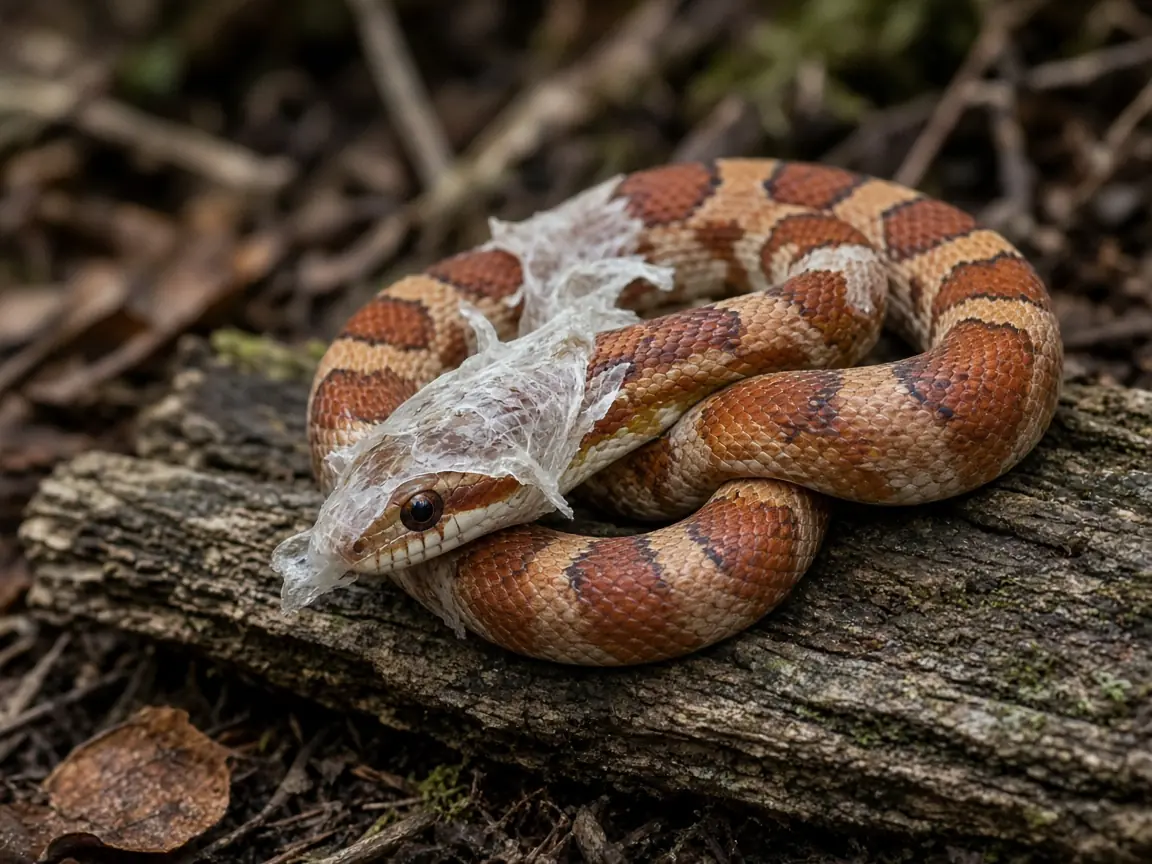
Quick facts
- Who: the Barbados threadsnake (Tetracheilostoma carlae, first named Leptotyphlops carlae), a burrowing threadsnake found only on Barbados.
- Size: adults are about 100 mm long, with a record of 104 mm. The female used to describe the species weighed 0.60 g alive (Hedges, 2008).
- Status: assessed as Critically Endangered (IUCN Red List, 2016; check the Red List for current status); rediscovered in March 2025 after almost 20 years unseen.
What is the smallest snake in the world?
The Barbados threadsnake. Blair Hedges of Pennsylvania State University described it in 2008 in Zootaxa, in a paper titled "At the lower size limit in snakes". The largest of the five adults he examined, a female, measured 104 mm from snout to tail tip. He named the species after his wife, herpetologist Carla Ann Hass, who collected the type specimen with him on 9 June 2006 under a rock near Bonwell, St. Joseph Parish (Hedges, 2008; Reptile Database).
A Kenyan threadsnake, Leptotyphlops tanae, had a 103 mm specimen, but every adult Hedges could sex was male. Female threadsnakes are usually longer than males, so he expected its females to reach about 111 to 127 mm. That makes T. carlae the smallest snake known from adults of both sexes, with its Martinique relative (108 mm) perhaps second. Compare the giants on our species guide.
What does the Barbados threadsnake look like?
A dark brown to black thread, about as long as your palm. The adult female holotype weighed just 0.60 g alive. Pale yellowish-grey stripes run from head to tail tip, with a thinner inner pair along the back, and the tail ends in a tiny spine (Hedges, 2008). More in our anatomy guide.
Why can't snakes get any smaller?
Hedges argued that the limit comes from making babies. The holotype carried a single egg, 13.7 mm long and only 2.2 mm wide, and one paratype had one enlarging egg. A tiny tube-shaped body squeezes a lone, relatively big egg into a long, thin shape: across 193 snake species, eggs get longer and thinner as clutch size falls (Hedges, 2008). Small animals also have relatively larger organs, leaving less room for eggs (see oviparous).
Hedges estimated that hatchlings of the smallest snakes are about 40 to 50 mm long, roughly half the adult maximum, whereas young pythons and boas are only 5 to 10% of maximum adult length. No Barbados threadsnake hatchling has been measured yet, so this is based on relatives. Making one baby half your own length, he concluded, sets a lower size limit for snakes.
What do threadsnakes eat?
Mostly the larvae, pupae and eggs of ants and termites. Barbados's Ministry of Environment says this species burrows in soil and eats termites and their eggs. Better-studied relatives show how such tiny snakes feed:
- Huge meals of tiny prey: African thread snakes (Leptotyphlops scutifrons) eat almost only small ant larvae and pupae, feeding infrequently but taking up to 350 items in one meal (Webb et al., 2000).
- A unique jaw: in the Texas threadsnake (Leptotyphlops dulcis), the lower jaw swings in and out of the mouth to rake prey down the throat. Kley and Brainerd (1999) called it "mandibular raking", the only known vertebrate feeding method that moves prey with the lower jaw alone.
- Chemical defence: the same snakes follow army ant trails, drawn by the ants' secretions, while their own cloacal secretion repels the ants and some snake-eating snakes (Watkins, Gehlbach & Kroll, 1969).
- Owl housemates: eastern screech owls carry live blind snakes to their nests, where the snakes eat insect larvae in the debris. Chicks sharing a nest with snakes grow faster and die less often (Gehlbach & Baldridge, 1987).
The threadsnake family, Leptotyphlopidae, holds the smallest and thinnest snakes: 116 species in 2009, mainly in Africa and the American tropics. A DNA study that year placed the Barbados species in the genus Tetracheilostoma (Adalsteinsson et al., 2009). Threadsnakes are non-venomous and harmless to people; see venom vs constriction.
Where does the Barbados threadsnake live?
Only in a small corner of one island. The known records came from a roughly 40 km² upland area of east-central Barbados (St. Andrew, St. Joseph and part of St. John parishes) without the island's usual reef-limestone cap. Hedges estimated that suitable forest there might cover no more than a few square kilometres (Hedges, 2008), and Re:wild says 98% of Barbados's primary forest has been cleared. See our snake habitats page.
It also hid in museums: specimens from 1889 and 1963 had been mistaken for the Martinique species, and a 1918 one labelled "St. John, Antigua" really came from St. John Parish, Barbados (Hedges, 2008).
Is the Barbados threadsnake endangered?
Yes. It was assessed as Critically Endangered on the IUCN Red List in 2016 (Daltry, Powell & Henderson, 2016), and after 2006 it went unconfirmed for so long that Re:wild listed it as lost to science. On 20 March 2025, surveyors from the Barbados Ministry of Environment and Re:wild lifted a rock wedged under a tree root in central Barbados and found a tiny snake. After checking it under a microscope at the University of the West Indies, Cave Hill, they released it where it was found. The government calls it the first confirmed sighting in 19 years and only the fifth wild record in 135 years, from a new location.
Every sighting reported between 2006 and 2025 had turned out to be the invasive Brahminy blind snake, or flowerpot snake, an all-female species that reproduces without mating (see our flowerpot snake article). The threadsnake has eyes on the sides of its head and two pairs of pale stripes; the flowerpot snake has eyes on top of its head and no stripes (Barbados government). Hedges warned in 2008 that the newcomer could compete with the native snake. For more ID help, see our venomous or not guide.
More reading: how sea snakes breathe through their skin, our research papers and in the SnakeWise shop.
FAQ
What is the smallest snake in the world?
The Barbados threadsnake (Tetracheilostoma carlae). Adults are about 10 cm long, with a maximum recorded length of 104 mm (Hedges, 2008).
How much does the smallest snake weigh?
About 0.6 g: the adult female holotype weighed 0.60 g alive (Hedges, 2008).
Is the Barbados threadsnake dangerous?
No. Threadsnakes are tiny, non-venomous burrowers that eat insect larvae and eggs, and are harmless to people.
How many eggs does the smallest snake lay?
Evidence suggests just one, 13.7 mm long and 2.2 mm wide in the holotype (Hedges, 2008).
Is the Barbados threadsnake extinct?
No. It has been assessed as Critically Endangered (IUCN Red List, 2016) and was rediscovered in central Barbados on 20 March 2025, after almost 20 years without a confirmed sighting.
Sources
- Hedges, S. B. (2008). At the lower size limit in snakes: two new species of threadsnakes (Squamata: Leptotyphlopidae: Leptotyphlops) from the Lesser Antilles. Zootaxa, 1841, 1–30. doi:10.11646/zootaxa.1841.1.1
- Adalsteinsson, S. A., Branch, W. R., Trape, S., Vitt, L. J., & Hedges, S. B. (2009). Molecular phylogeny, classification, and biogeography of snakes of the Family Leptotyphlopidae (Reptilia, Squamata). Zootaxa, 2244, 1–50. doi:10.11646/zootaxa.2244.1.1
- Kley, N. J., & Brainerd, E. L. (1999). Feeding by mandibular raking in a snake. Nature, 402, 369–370. doi:10.1038/46460
- Webb, J. K., Shine, R., Branch, W. R., & Harlow, P. S. (2000). Life-history strategies in basal snakes: reproduction and dietary habits of the African thread snake Leptotyphlops scutifrons (Serpentes: Leptotyphlopidae). Journal of Zoology, 250(3), 321–327. doi:10.1111/j.1469-7998.2000.tb00776.x
- Watkins, J. F., II, Gehlbach, F. R., & Kroll, J. C. (1969). Attractant-repellent secretions of blind snakes (Leptotyphlops dulcis) and their army ant prey (Neivamyrmex nigrescens). Ecology, 50(6), 1098–1102. doi:10.2307/1936906
- Gehlbach, F. R., & Baldridge, R. S. (1987). Live blind snakes (Leptotyphlops dulcis) in eastern screech owl (Otus asio) nests: a novel commensalism. Oecologia, 71(4), 560–563. doi:10.1007/BF00379297
- Daltry, J. C., Powell, R., & Henderson, R. W. (2016). Tetracheilostoma carlae. The IUCN Red List of Threatened Species (Critically Endangered). doi:10.2305/IUCN.UK.2016-3.RLTS.T203637A2769298.en
- Biodiversity Conservation and Management Section, Ministry of Environment and National Beautification, Barbados (2025). 'Lost' Species Finally Found, and Worm Snakes in Barbados.
- Re:wild (2025, July 23). World's smallest snake, lost to science for nearly 20 years, rediscovered in Barbados.
- The Reptile Database: Tetracheilostoma carlae species account (synonyms, type locality, clutch size, etymology).
Cite this page
APA: SnakeWise. (2026, October 16). What Is the Smallest Snake in the World? Meet the Barbados Threadsnake. SnakeWise. https://snakewise.org/blog/what-is-the-smallest-snake-in-the-world.html
MLA: "What Is the Smallest Snake in the World? Meet the Barbados Threadsnake." SnakeWise, 16 Oct. 2026, snakewise.org/blog/what-is-the-smallest-snake-in-the-world.html.
Chicago: SnakeWise. "What Is the Smallest Snake in the World? Meet the Barbados Threadsnake." SnakeWise. October 16, 2026. https://snakewise.org/blog/what-is-the-smallest-snake-in-the-world.html.