What Is the Longest Snake in the World? The Reticulated Python Explained
The longest snake in the world is the reticulated python (Malayopython reticulatus) of Southeast Asia. Most wild adults are about 2.5 to 3 m long from snout to vent, and only around 1% grow past 4.5 m. The longest reliably measured one, Pittsburgh Zoo's Colossus, was 6.35 m. The green anaconda is heavier, and the extinct Titanoboa was longer still, at about 13 m.
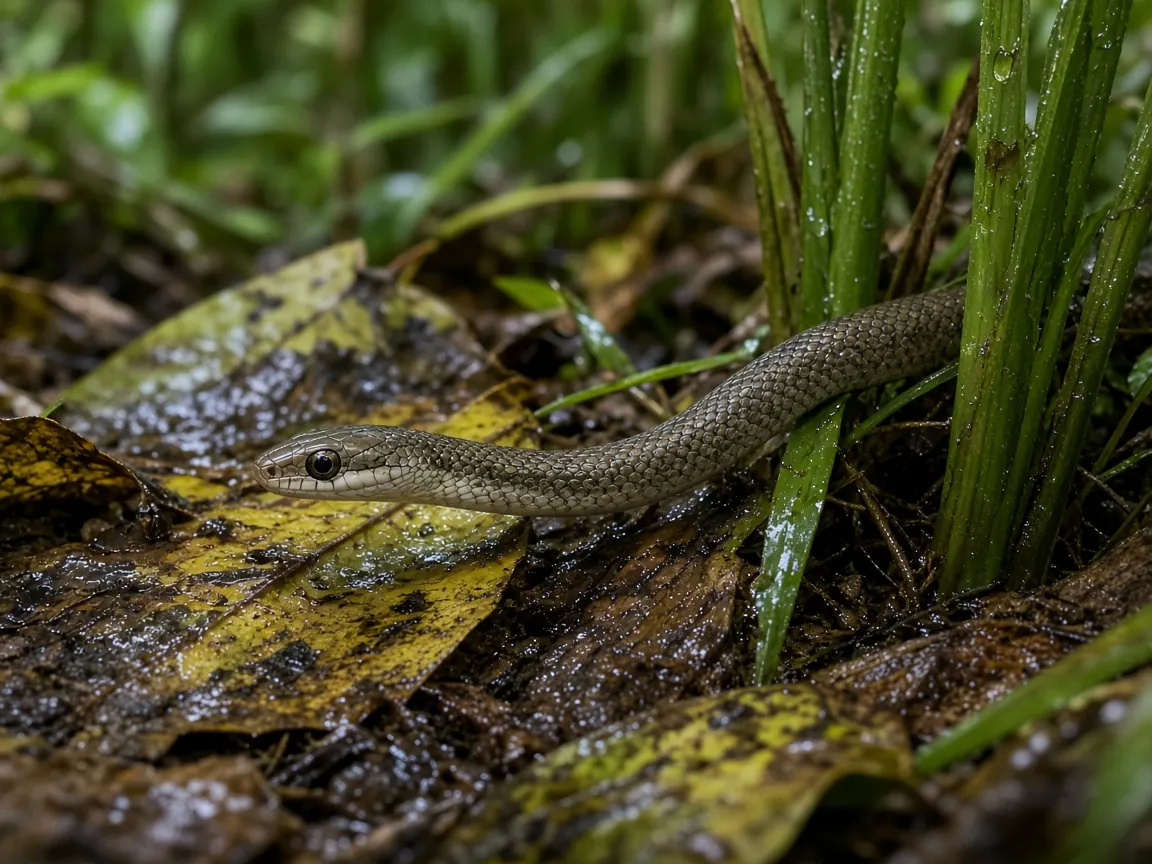
⚠️ Venom labels may be wrong. Treat every snake as potentially dangerous. See the safety warning above.
Quick facts
- Longest snake: the reticulated python (Malayopython reticulatus, formerly Python reticulatus) of Southeast Asia, which researchers call "the world's longest species of snake" (Natusch et al., 2016).
- Typical size: wild pythons harvested in Sumatra averaged about 2.5–2.8 m snout-to-vent and 6–8 kg (Natusch et al., 2016).
- Giants are rare: only about 1–1.4% of more than 4,200 snakes measured were longer than 4.5 m snout-to-vent (Natusch et al., 2016).
- Longest confirmed captive: "Colossus" at Pittsburgh Zoo, 6.35 m, measured after death (Barker et al., 2012).
- Heaviest snake: the green anaconda of South America, a bulkier snake (Rivas et al., 2024; Smithsonian's National Zoo).
- Largest ever: the extinct Titanoboa of Colombia, estimated at about 13 m long (Head et al., 2009).
What is the longest snake in the world?
The reticulated python. It is named for the net-like ("reticulated") pattern on its back and lives in forests, rivers and farmland across mainland and island Southeast Asia (Reptile Database). A 2016 study in PLOS ONE by Daniel Natusch, Richard Shine and colleagues describes it plainly as "the world's longest species of snake". The green anaconda can be heavier, but no living snake has been reliably measured longer than a big reticulated python.
Being the longest species doesn't mean every reticulated python is huge. Most are far smaller than the record holders, and the very longest claims in books and online are hard to check.
How long do reticulated pythons usually get?
We know this unusually well because so many are measured. More than 300,000 wild reticulated pythons are harvested each year in Indonesia and Malaysia for their skins and meat, under trade quotas regulated by CITES (Natusch et al., 2016). Natusch's team measured more than 4,200 harvested pythons at processing sites in northern and southern Sumatra, in surveys 20 years apart (1995 and 2015).
The average snout-to-vent length (SVL, nose to the base of the tail) was 245–282 cm depending on the region and year, and the average weight was about 6–8 kg. Only about 1.1–1.4% of the snakes were over 4.5 m SVL, which the authors call "truly giant". Females first become mature at around 2.2–2.4 m SVL, and half are mature by about 2.7 m. The team found no sign that 20 years of harvesting had made the pythons smaller. Average size, size at maturity, clutch size and the share of giants were all stable, so the trade looked sustainable. Most of the snakes were caught in oil palm plantations, where the rats they eat are abundant (Natusch et al., 2016).
In the Philippines, anthropologists Thomas Headland and Harry Greene reported that males reach up to about 5 m and 20 kg, while females can exceed 7 m and 75 kg but rarely reach 10 m. They also examined a 6.9 m python shot for meat by an Agta hunter in 1970 (Headland & Greene, 2011).
Why are snake length records so hard to trust?
Snakes are stretchy, and a measuring tape can't easily follow a coiled, moving animal. Rivas, Ascanio and Muñoz (2008) point out that how long a snake measures depends on how much it is stretched. They designed a repeatable method and tested it on wild green anacondas.
Barker and colleagues (2012) reviewed the most famous python records and found that every live length they could check was longer than the length measured after the snake died. "Colossus", a reticulated python at the Pittsburgh Zoo from 1949 to 1963, is a good example. Keepers reported him at 7.1 m in 1951, 8.3 m in 1954 and 8.7 m in 1956, but those figures were tape estimates taken through a gap while he moved. When he was measured after his death, he was 6.35 m. Barker's team also noted that Colossus had arrived labelled as a female and was in fact a male. A later note in the same bulletin cites the Barker review for Colossus at 6.35 m and lists two preserved museum specimens at 6.38 m (Basel) and 7.10 m (Copenhagen) (Foxon, 2023). Treat claims of 9–10 m wild pythons with caution unless a specimen was properly measured.
Longest vs heaviest: the green anaconda
The green anaconda is the biggest snake by bulk. It is the largest member of its genus, Eunectes, and a 2024 study split it into two look-alike species, the southern E. murinus and the northern green anaconda, E. akayima (Rivas et al., 2024). The Smithsonian's National Zoo lists green anacondas at up to about 9 m long, 30 cm thick and 250 kg. A reticulated python of the same length is far slimmer. All anaconda species are listed as Least Concern by the IUCN and on CITES Appendix II (Rivas et al., 2024).
Was there ever a longer snake?
Yes. Fossil vertebrae from the Cerrejón coal mine in Colombia belong to Titanoboa cerrejonensis, a boa that lived around 58–60 million years ago. Head and colleagues (2009) estimated it at about 13 m and 1,135 kg, the largest snake known. They argued that a snake that big would have needed a tropical mean annual temperature of about 30–34 °C. A 2023 study using data from hundreds of wild green anacondas put Titanoboa at about 12.8 m and around 1,200 kg (Rivas, 2023). Today's biggest snakes still live in the tropics, in South America and Southeast Asia (Head et al., 2009).
Are reticulated pythons dangerous?
They are not venomous. They kill prey by constriction, and big ones can be dangerous to people. Among the Agta, hunter-gatherers in the Philippines, 26% of 58 adult men surveyed had survived attacks by reticulated pythons, and six people died in python attacks between 1934 and 1973. The Agta and the pythons hunted the same deer, wild pigs and monkeys, and each sometimes ate the other (Headland & Greene, 2011). Attacks on people are still very rare. Never approach or handle a large python. If someone is bitten or caught in a constrictor's coils, call emergency services. Even a non-venomous bite can cause deep wounds and infection. Our snake safety guide explains what to do.
Compare the giants in our species guide (including the green anaconda), learn how constrictors kill on our venom and constriction page, see the forest, river and wetland homes of big snakes on the habitats page, or check a snake you saw with the venomous or not ID guide.
More reading: what is the smallest snake in the world?, how long can a snake go without eating? (Burmese pythons), why removing large female pythons matters, and in the SnakeWise shop.
FAQ
What is the longest snake in the world?
The reticulated python (Malayopython reticulatus) of Southeast Asia, described as the world's longest snake species (Natusch et al., 2016).
How long is the longest reticulated python ever measured?
The best-checked captive record is "Colossus" of Pittsburgh Zoo at 6.35 m, measured after death. Larger live estimates were unreliable (Barker et al., 2012). A preserved museum specimen in Copenhagen is listed at 7.10 m (Foxon, 2023).
How big is an average reticulated python?
In more than 4,200 wild Sumatran pythons, the average was about 2.5–2.8 m snout-to-vent and 6–8 kg, and only about 1% were over 4.5 m (Natusch et al., 2016).
Is the green anaconda longer than the reticulated python?
No. It is heavier, at up to about 250 kg according to the Smithsonian's National Zoo, but the reticulated python is the longer species.
What was the biggest snake ever?
The extinct Titanoboa cerrejonensis of Colombia, about 58–60 million years old, estimated at roughly 13 m and over 1,100 kg (Head et al., 2009; Rivas, 2023).
Sources
- Natusch, D. J. D., Lyons, J. A., Mumpuni, Riyanto, A., & Shine, R. (2016). Jungle giants: assessing sustainable harvesting in a difficult-to-survey species (Python reticulatus). PLOS ONE, 11(7), e0158397. doi:10.1371/journal.pone.0158397
- Headland, T. N., & Greene, H. W. (2011). Hunter-gatherers and other primates as prey, predators, and competitors of snakes. Proceedings of the National Academy of Sciences, 108(52), E1470–E1474. doi:10.1073/pnas.1115116108
- Head, J. J., Bloch, J. I., Hastings, A. K., Bourque, J. R., Cadena, E. A., Herrera, F. A., Polly, P. D., & Jaramillo, C. A. (2009). Giant boid snake from the Palaeocene neotropics reveals hotter past equatorial temperatures. Nature, 457, 715–717. doi:10.1038/nature07671
- Rivas, J. A. (2023). What can studying anacondas tell us about Titanoboa cerrejonensis? Exploring the life of an extinct giant snake using an extant pretty big snake. Herpetological Journal, 33(3), 68–75. doi:10.33256/33.3.6875
- Rivas, J. A., de la Quintana, P., Mancuso, M., Pacheco, L. F., Rivas, G. A., Mariotto, S., et al. (2024). Disentangling the anacondas: revealing a new green species and rethinking yellows. Diversity, 16(2), 127. doi:10.3390/d16020127
- Rivas, J. A., Ascanio, R. E., & Muñoz, M. D. C. (2008). What is the length of a snake? Contemporary Herpetology, 2008, 1–3. doi:10.17161/ch.vi1.11941
- Barker, D. G., Barten, S. L., Ehrsam, J. P., & Daddono, L. (2012). The corrected lengths of two well-known giant pythons and the establishment of a new maximum length record for Burmese pythons, Python bivittatus. Bulletin of the Chicago Herpetological Society, 47(1), 1–6.
- Foxon, F. (2023). Fast or slow, how long can snakes grow? Bulletin of the Chicago Herpetological Society, 58(8), 123–124.
- Smithsonian's National Zoo & Conservation Biology Institute. Green anaconda (size and weight).
- The Reptile Database: Malayopython reticulatus species account.
Cite this page
APA: SnakeWise. (2026, October 26). What Is the Longest Snake in the World? The Reticulated Python Explained. SnakeWise. https://snakewise.org/blog/what-is-the-longest-snake-in-the-world.html
MLA: "What Is the Longest Snake in the World? The Reticulated Python Explained." SnakeWise, 26 Oct. 2026, snakewise.org/blog/what-is-the-longest-snake-in-the-world.html.
Chicago: SnakeWise. "What Is the Longest Snake in the World? The Reticulated Python Explained." SnakeWise. October 26, 2026. https://snakewise.org/blog/what-is-the-longest-snake-in-the-world.html.