Which Snake Has the Longest Fangs? The Gaboon Viper Explained
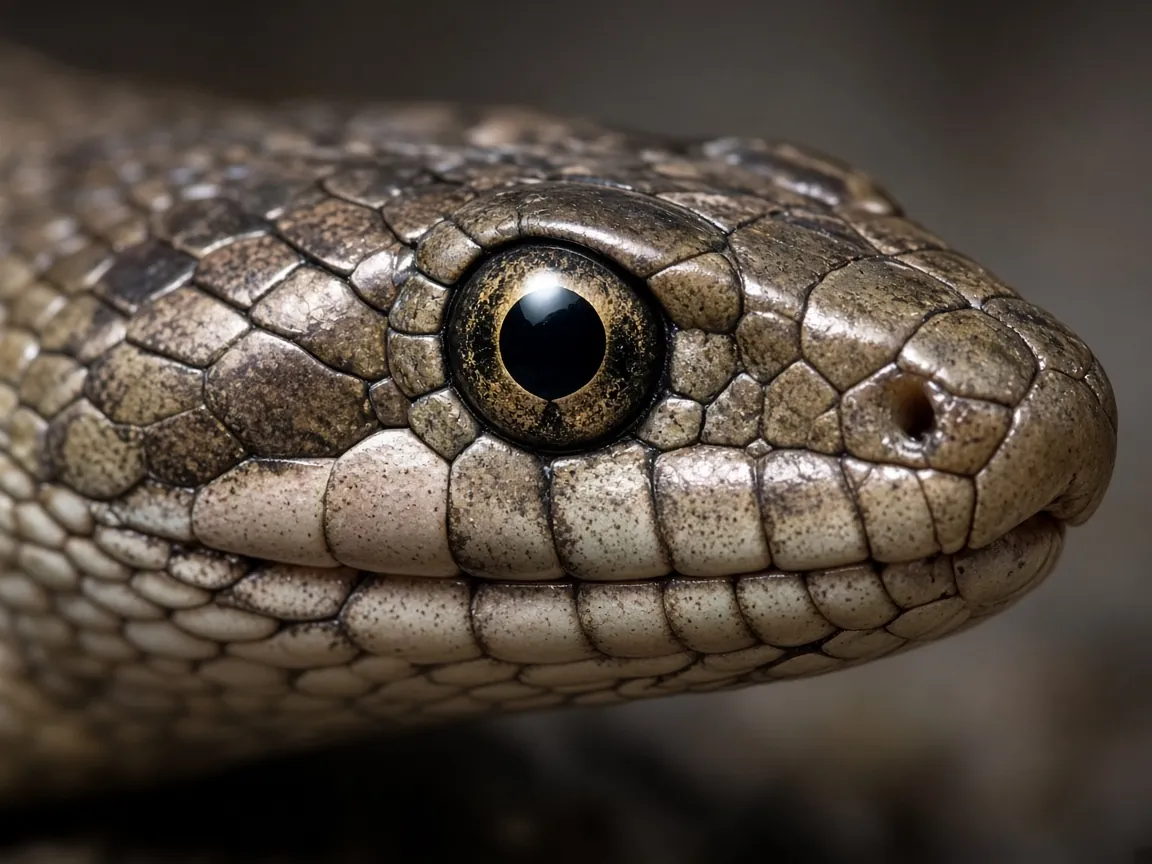
The Gaboon viper (Bitis gabonica) of sub-Saharan Africa has the longest fangs of any snake, up to about 5 cm (2 inches). The hollow fangs fold flat against the roof of its mouth and swing forward to strike, yet this huge, superbly camouflaged viper is famously calm and rarely bites people.
In a bite emergency, call local emergency services or poison control immediately - don't rely on this site.
Quick facts
- Who: the Gaboon viper (Bitis gabonica), a heavy-bodied viper of the forests of central, eastern and southern Africa.
- Fangs: up to about 5 cm (2 in) long, the longest of any snake. A 1.83 m specimen had 50 mm fangs.
Which snake has the longest fangs?
The Gaboon viper. The Smithsonian's National Zoo says its fangs can reach 2 inches (5 cm), the longest of any venomous snake, and Guinness World Records lists fangs of 50 mm in a 1.83 m individual. It is also Africa's biggest viper, more than 1.8 m long and over 20 kg (Smithsonian's National Zoo). Its western form is now a separate species, the West African Gaboon viper (Bitis rhinoceros), whose fangs also reach about 2 inches (Reptile Database; Saint Louis Zoo). Compare other record-holders on our species guide.
How do such long fangs fit in its mouth?
They fold. Viper fangs are "extremely long, rotating, hollow teeth" (Cundall, 2009). Each fang sits on a short upper-jaw bone that swings, so the fang lies back along the roof of the mouth when the jaws are shut and rotates forward as the snake strikes. Venom flows down an enclosed canal inside the tooth, much like a hypodermic needle. Learn the terms in our glossary entries for fang and viper.
This kit evolved more than once. Vipers, elapids (cobras and their relatives) and the African burrowing asps each evolved front fangs with tubular canals, large venom glands and muscles that squeeze those glands (Jackson, 2003). By tracking a tooth-forming gene in 96 snake embryos of eight species, Vonk and colleagues (2008) found that front fangs actually start growing at the back of the upper jaw and are carried forward as the head develops, much like the rear fangs of other snakes. Fossil fangs from the Early Miocene of Germany already look just like modern viper and elapid fangs (Kuch et al., 2006).
Why do vipers have such long fangs?
Probably because of how they strike, not because long fangs are stronger. Broeckhoven and du Plessis (2017) micro-CT scanned fangs from 20 snake species and ran stress simulations. The fused tubular fangs of vipers were much longer relative to skull size than grooved rear fangs, yet stress patterns did not differ between fang types. They suggest that long fangs pay off for snakes that often bite and release, letting them inject venom deep in a single quick strike.
Extreme teeth need precise control. David Cundall (2009) analysed more than 750 strikes by 285 vipers from 86 species, filmed at up to 250 frames per second. In more than a third of strikes the snakes repositioned their fangs after first contact, because a fang had missed or hit a spot where it could not sink in properly. Extreme fang length, he concluded, "has apparently coevolved with extreme functions".
How does the Gaboon viper hunt?
By waiting. The National Zoo describes it as a passive hunter that lies hidden and strikes whatever small animal passes within range, and says that, unlike most snakes that strike and release, it holds on until the prey dies. A field study of its close relative the puff adder (Bitis arietans) in South Africa showed the choice depends on prey size: puff adders usually held small prey such as toads, shrews and small mice, but often let go of larger mice and rats, whose bites are more dangerous (Glaudas et al., 2017). See how fangs and venom compare with squeezing on our venom vs constriction page.
In southern Nigeria, researchers recorded the stomach contents of 524 Gaboon vipers. About 31% held identifiable food, mostly small mammals, followed by birds, lizards and occasionally frogs. Pregnant females never had food in their stomachs (Luiselli & Akani, 2003).
How does it stay hidden?
Its pattern of pale, brown and black hourglass shapes breaks up its outline on the forest floor, and its broad pale head looks like a fallen leaf, right down to a dark central "vein" (Smithsonian's National Zoo). The black patches are special. Spinner and colleagues (2013) found that on the West African Gaboon viper, the black scales carry leaf-like microstructures covered in tiny ridges. Together with dark pigment, they reflect less than 11% as much light as a white reference standard from any angle, and four times less than the snake's other scales. It was the first black structural colour reported in snakes, and it makes the spots look deep and velvety. More on where it lives on our snake habitats page.
Is the Gaboon viper dangerous to people?
Its bite is a medical emergency, but bites are rare. In a 1984 review, Marsh and Whaler called the snake "undoubtedly docile" and noted only six detailed clinical reports of bites. It produces "prodigious amounts of venom", though weight for weight the venom is fairly weak; serious envenomation causes a sudden drop in blood pressure, heart damage and breathing difficulty.
Most modern cases involve captive snakes. A review of five bites from pet Gaboon vipers found that four patients needed hospital care for spreading swelling, local tissue damage, chest tightness and slow blood clotting; all four recovered after antivenom, though one lost the tip of a finger. The fifth person died alone, unable to call for help (Marsh, DeRoos & Touger, 2007). The National Zoo says most bites happen when the snake is stepped on. If you are ever bitten by any snake, call emergency services immediately; our snake safety guide covers what to do.
Where do Gaboon vipers live?
In rainforests and other wet areas of central, eastern and western Africa (Smithsonian's National Zoo). The Reptile Database lists records from Nigeria east to Uganda and south to Mozambique and Zululand in South Africa. Females give birth to live young, with the National Zoo reporting 50 to 60 babies at a time and a lifespan of about 20 years. Not sure whether a snake you saw is venomous? Try our venomous or not ID guide.
More reading: how king cobras build nests, the smallest snake in the world, our research papers and in the SnakeWise shop.
FAQ
Which snake has the longest fangs?
The Gaboon viper (Bitis gabonica) of Africa, with fangs up to about 5 cm (2 inches) long.
How long are Gaboon viper fangs?
Up to about 5 cm. Guinness World Records lists 50 mm fangs in a 1.83 m snake.
How do vipers fold their fangs?
Each fang is fixed to a short upper-jaw bone that rotates. The fang lies back against the roof of the mouth when the jaws are closed and swings forward during a strike (Cundall, 2009).
Is the Gaboon viper aggressive?
No. It is known for being calm and rarely bites people, but its bite is a medical emergency that needs antivenom (Marsh & Whaler, 1984; Marsh et al., 2007).
What does the Gaboon viper eat?
Mainly small mammals, plus birds, lizards and occasionally frogs (Luiselli & Akani, 2003).
Sources
- Cundall, D. (2009). Viper fangs: functional limitations of extreme teeth. Physiological and Biochemical Zoology, 82(1), 63–79. doi:10.1086/594380
- Broeckhoven, C., & du Plessis, A. (2017). Has snake fang evolution lost its bite? New insights from a structural mechanics viewpoint. Biology Letters, 13(8), 20170293. doi:10.1098/rsbl.2017.0293
- Marsh, N. A., & Whaler, B. C. (1984). The Gaboon viper (Bitis gabonica): its biology, venom components and toxinology. Toxicon, 22(5), 669–694. doi:10.1016/0041-0101(84)90152-1
- Marsh, N., DeRoos, F., & Touger, M. (2007). Gaboon viper (Bitis gabonica) envenomation resulting from captive specimens: a review of five cases. Clinical Toxicology, 45(1), 60–64. doi:10.1080/15563650600795693
- Spinner, M., Kovalev, A., Gorb, S. N., & Westhoff, G. (2013). Snake velvet black: hierarchical micro- and nanostructure enhances dark colouration in Bitis rhinoceros. Scientific Reports, 3, 1846. doi:10.1038/srep01846
- Luiselli, L., & Akani, G. C. (2003). Diet of sympatric Gaboon vipers (Bitis gabonica) and nose-horned vipers (Bitis nasicornis) in southern Nigeria. African Journal of Herpetology, 52(2), 101–106. doi:10.1080/21564574.2003.9635485
- Glaudas, X., Kearney, T. C., & Alexander, G. J. (2017). To hold or not to hold? The effects of prey type and size on the predatory strategy of a venomous snake. Journal of Zoology, 302(3), 211–218. doi:10.1111/jzo.12450
- Jackson, K. (2003). The evolution of venom-delivery systems in snakes. Zoological Journal of the Linnean Society, 137(3), 337–354. doi:10.1046/j.1096-3642.2003.00052.x
- Vonk, F. J., Admiraal, J. F., Jackson, K., Reshef, R., de Bakker, M. A. G., et al. (2008). Evolutionary origin and development of snake fangs. Nature, 454, 630–633. doi:10.1038/nature07178
- Kuch, U., Müller, J., Mödden, C., & Mebs, D. (2006). Snake fangs from the Lower Miocene of Germany: evolutionary stability of perfect weapons. Naturwissenschaften, 93(2), 84–87. doi:10.1007/s00114-005-0065-y
- Smithsonian's National Zoo and Conservation Biology Institute. Gaboon viper (size, fangs, hunting, behaviour, reproduction, lifespan).
- Saint Louis Zoo. West African Gaboon viper.
- Guinness World Records. Snake with the longest fangs.
- The Reptile Database: Bitis gabonica species account (distribution, reproduction, status of B. rhinoceros).
Cite this page
APA: SnakeWise. (2026, October 18). Which Snake Has the Longest Fangs? The Gaboon Viper Explained. SnakeWise. https://snakewise.org/blog/which-snake-has-the-longest-fangs.html
MLA: "Which Snake Has the Longest Fangs? The Gaboon Viper Explained." SnakeWise, 18 Oct. 2026, snakewise.org/blog/which-snake-has-the-longest-fangs.html.
Chicago: SnakeWise. "Which Snake Has the Longest Fangs? The Gaboon Viper Explained." SnakeWise. October 18, 2026. https://snakewise.org/blog/which-snake-has-the-longest-fangs.html.