King cobra
Ophiophagus hannah · South & Southeast Asia
The world's longest venomous snake, reaching over 5 m. It eats mainly other snakes and is the only snake known to build a nest for its eggs. Read how king cobras build nests.
There are around 4,000 snake species. The reticulated python is often cited as the longest, the green anaconda is the heaviest, the king cobra is the longest venomous snake, and the inland taipan has the most toxic venom of any land snake in lab tests. The table compares 12 notable species, and the profiles below add a few more.
In a bite emergency, call local emergency services or poison control immediately - don't rely on this site.
For identification or care questions, consult a herpetologist or exotic-animal vet.
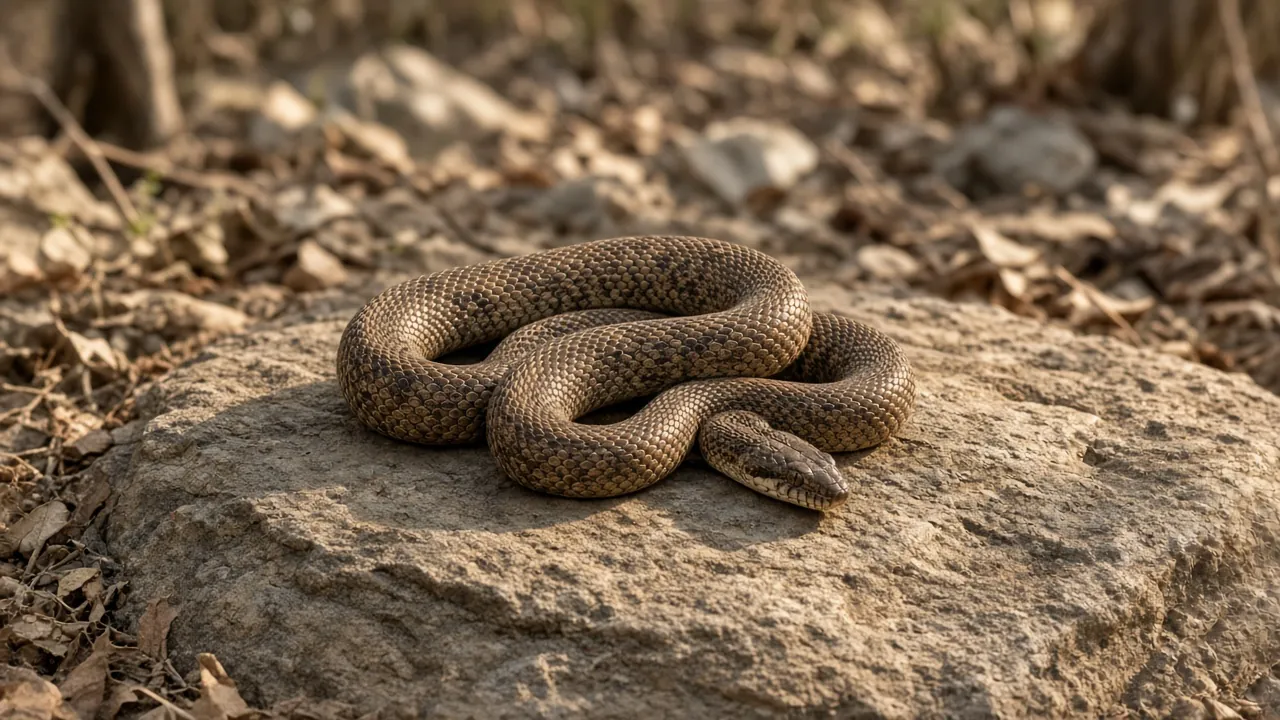
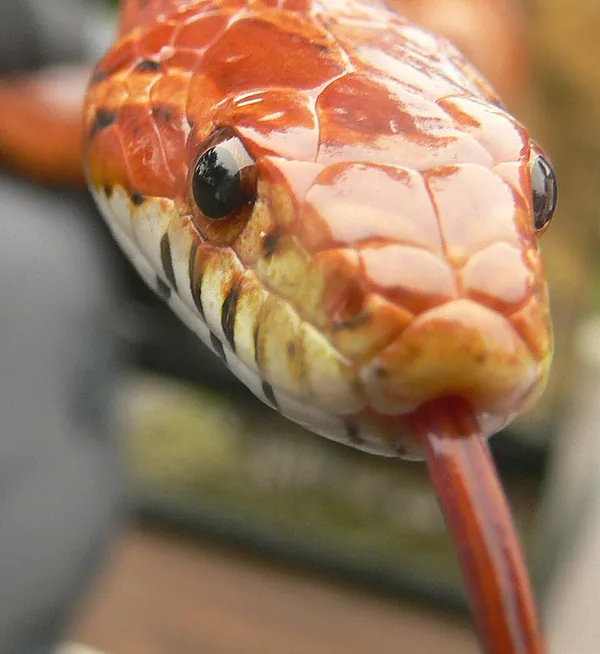
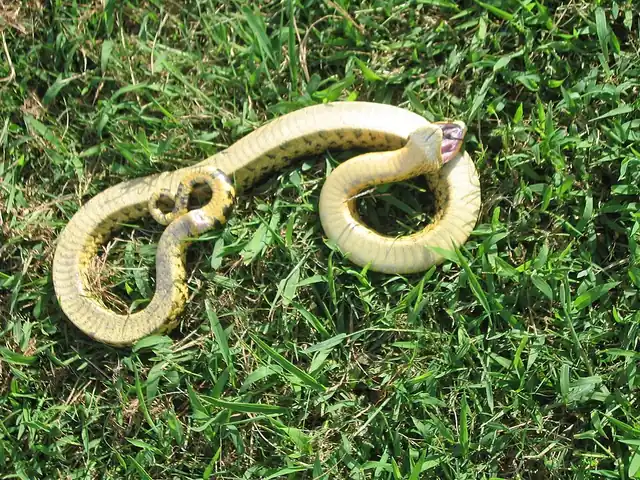
Typical adult lengths are approximate; individuals vary.
⚠️ Venom labels may be wrong. Treat every snake as potentially dangerous. See the safety warning above.
| Species | Typical length | Prey capture | Range |
|---|---|---|---|
| King cobra | Up to ~5.5 m | Venomous (neurotoxic) | South & Southeast Asia |
| Reticulated python | Up to ~7 m+ | Constrictor | Southeast Asia |
| Green anaconda | Up to ~5–6 m; heaviest snake | Constrictor | South America |
| Black mamba | ~2–3 m | Venomous (neurotoxic) | Sub-Saharan Africa |
| Inland taipan | ~1.8–2.5 m | Venomous | Central Australia |
| Gaboon viper | ~1.2–1.8 m | Venomous | Central & West Africa |
| Eastern diamondback rattlesnake | ~1.2–2 m | Venomous | Southeastern USA |
| Corn snake | ~0.9–1.5 m | Constrictor (harmless) | Southeastern USA |
| Brahminy blind snake | ~10–15 cm | Harmless burrower | Worldwide (introduced) |
| Yellow-bellied sea snake | ~0.7–1 m | Venomous | Indian & Pacific Oceans |
| Paradise tree snake | ~1–1.2 m | Mildly venomous, harmless to people | Southeast Asia |
| Barbados threadsnake | ~10 cm | Harmless | Barbados |
Wondering if a snake near you is dangerous? Use our venomous or not guide by region.
Ophiophagus hannah · South & Southeast Asia
The world's longest venomous snake, reaching over 5 m. It eats mainly other snakes and is the only snake known to build a nest for its eggs. Read how king cobras build nests.
Malayopython reticulatus · Southeast Asia
Often cited as the longest snake species, with records over 6–7 m. A non-venomous constrictor and strong swimmer.
Eunectes murinus · South America
The heaviest snake, potentially exceeding 200 kg. Spends much time in water, ambushing prey at the edge.
Dendroaspis polylepis · Sub-Saharan Africa
Named for the black inside of its mouth, not its grey-brown body. One of the fastest snakes, but shy and prefers to flee.
Oxyuranus microlepidotus · Central Australia
Has the most toxic venom of any land snake in lab tests, yet is reclusive and bites on people are very rare.
Bitis gabonica · Central & West Africa
Has the longest fangs of any snake (up to about 5 cm) and superb leaf-litter camouflage. Read how its record-breaking fangs work.
Crotalus adamanteus · Southeastern USA
The heaviest venomous snake in the Americas. Its rattle is made of interlocking keratin segments added at each shed.
Pantherophis guttatus · Southeastern USA
Corn snakes are often mistaken for copperheads. Compare them in our baby copperhead vs. corn snake guide.
A gentle, non-venomous rodent-eater and one of the most popular pet snakes.
Indotyphlops braminus · Worldwide (spread by people)
A tiny burrower resembling an earthworm. All known individuals are female and reproduce without males (parthenogenesis). Read how this snake reproduces without mating.
Hydrophis platurus · Tropical Indian & Pacific Oceans
Lives its whole life at sea, drifting along ocean slicks. Can absorb some oxygen through its skin. Read how sea snakes breathe through their skin.
Chrysopelea paradisi · Southeast Asia
A 'flying' snake that glides between trees by flattening its body and undulating in the air. Read the full paradise flying snake profile.
Tetracheilostoma carlae · Barbados
One of the smallest known snakes, roughly 10 cm long, about the size of a noodle. Read about the smallest snake in the world.
Thamnophis sirtalis parietalis · Central Canada (Manitoba)
A northern subspecies of the common garter snake. At Manitoba's Narcisse Snake Dens, huge numbers overwinter together in communal dens, and in spring one female can be wrapped in a "mating ball" of up to 100 males. Read why garter snakes form mating balls.
Python bivittatus · Invasive in South Florida
A non-venomous constrictor that is not native to Florida but has become one of South Florida's most significant invasive predators, eating mainly mammals and birds. It is highly cryptic and hard to find, and a mature female can lay dozens of eggs in a single clutch, so removing large females matters most. Read the study on which pythons to remove first.
There are around 4,000 snake species.
The reticulated python is often cited as the longest snake species, with records over 6–7 m. It is a non-venomous constrictor and strong swimmer from Southeast Asia.
The green anaconda of South America is the heaviest snake, potentially exceeding 200 kg.
The king cobra is the world's longest venomous snake, reaching over 5 m. It eats mainly other snakes and is the only snake known to build a nest for its eggs.
The inland taipan of Central Australia has the most toxic venom of any land snake in lab tests, yet it is reclusive and bites on people are very rare.
The Barbados threadsnake is one of the smallest known snakes, roughly 10 cm long, about the size of a noodle.
The Gaboon viper of Central and West Africa has the longest fangs of any snake, up to about 5 cm.
Yes. Burmese pythons (Python bivittatus) are not native to Florida but have become one of the most significant invasive predators in South Florida, eating mainly mammals and birds. They are non-venomous constrictors.